
4-Hour Work Week by Timothy Ferriss | A Book Review
Discover our in-depth book review of 'The 4-Hour Work Week' by Timothy Ferriss. Learn how this groundbreaking book can transform your approach to work and lifestyle design.
MONTHLY STATEMENTSBOOK REVIEWS
Self-help books are written to instruct readers on how to solve personal problems of various natures - ranging from emotional distress to practical life challenges. Authors dedicate their efforts to creating these literary works to serve as a vital source of healing and inspiration to their readers, providing comfort and direction during turbulent times. Self-help books serve not only as guides but also as companions that encourage individuals to live better, more fulfilling versions of their lives or teach them the essential skills and strategies needed to achieve their personal and professional goals. The journey through the pages of these books can sometimes evoke profound self-reflection and motivate readers to take actionable steps toward personal growth.
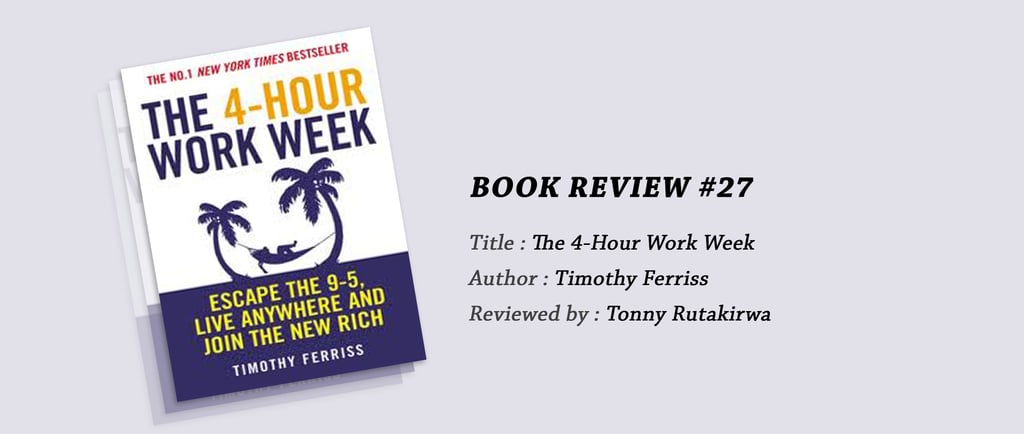
Over the years, there have been many excellent self-help books that have been penned by notable and innovative authors who aim to impart their wisdom and experiences. These thoughtfully crafted books have continually proved to help their readers lead enriched lives by providing practical insights and advice. Among those wonderfully written self-help texts, one can find “The 4-Hour Workweek,” written by Timothy Ferriss, who is also the distinguished author of “The 4-Hour Chef” and “The 4-Hour Body.” This particular book is a gem in the self-help genre, capturing the attention of countless individuals seeking a change.
The 4-Hour Workweek tells the captivating story of the philosophy and techniques that the author, a serial job-quitter and self-declared hedonist, advocates for those yearning for an unconventional lifestyle. This transformative book narrates how Timothy built a successful business generating 40 thousand dollars per month while he simultaneously outsourced himself from the demanding business world into a more liberated life filled with travel and holistic self-development. The narrative is insightful, engaging, and aspirational, making it a must-read for those looking to re-evaluate their career paths and life choices.
An Overview of The Book
This remarkable book is a powerful resource that teaches its readers how to thoughtfully design their lifestyle, aligning it with the goals that the author has set forth. It challenges conventional wisdom and encourages readers to question societal norms. Additionally, the author meticulously combines eye - opening insights and compelling personal stories with detailed guides and resource lists to achieve this goal, making the information not just theoretical but practical and actionable.
The book resulted in practical, life-changing advice that is, however, quite substantial and can be overwhelming to absorb in a single reading. To facilitate understanding, the book is divided into clear parts, wherein the 'how-to' section provides exhaustive details of Timothy’s personal anecdotes and those of others who have successfully outsourced elements of their lives that limit their freedom and potential.
Tim’s book offers a perspective and a reality so foreign to the majority that it can easily be misconstrued as unrealistic and unattainable. The path to the Promised Land, as chronicled in this book, is neither straightforward nor simple; it requires a radical shift in the way one perceives the world and their interactions within it. The process of achieving this transformation is long and gradual, wherein one must reconsider and change many deeply ingrained comfortable habits and beliefs that have been accepted over decades.
Structure of The Book
The book is systematically structured into four sections that together form the acronym DEAL, which provides a framework for the reader’s journey. They are as follows:
Definition
The book starts by redefining the age-old concept of being rich and labels it as the 'New Rich.' According to the author, the new rich are not merely those who make a lot of money but rather individuals who live their lives as if they have all the wealth and resources they need. This critical distinction creates a paradigm shift, encouraging readers to embrace their creativity and live a fulfilling life based on experiences rather than accumulating material possessions.
Elimination
The second section of the book stresses the importance of understanding that doing unimportant things well does not make them essential in the grand scheme of life. One has to stay focused on their most significant activities and clients, thereby eliminating unnecessary and trivial work. Here, the author utilizes a concept familiar in economics called the Pareto principle, which asserts that 20% of our actions will yield 80% of our outcomes. Recognizing this principle empowers readers to prioritize effectively.
Automation
The third section of the book teaches readers to focus on the profitable activities that represent 20% in the Pareto principle. The author elaborates that the essence of the new rich revolves around outsourcing a substantial portion of one’s routine activities. Automation is achieved by initially starting the work yourself, setting high-quality standards, and then training someone else to undertake most of the tasks subsequently, thereby freeing up personal time for more enriching experiences.
Liberation
The final section of the book is targeted explicitly at liberating readers from the constraints of traditional 9 to 5 jobs, thereby offering them the freedom to manage their routines as they genuinely wish. Escaping from the confines of the office environment requires gradual implementation and, perhaps most importantly, demonstrating that one can work more efficiently while embracing a remote work style. Once individuals successfully prove their abilities to thrive outside the office structure, they may find that their employers are more willing to offer them the flexibility they desire in their professional lives.
Wrapping It Up
In conclusion, reading 'The 4-Hour Workweek' and actively taking actions based on the author’s well-considered suggestions might not make you a millionaire overnight, but it will undoubtedly catalyze a change in your life. It can inspire a transformative journey that encourages critical thinking about how we manage our time and resources. If you are seeking to grasp the freedom that stems from working smart rather than merely working hard, or if you aspire to create a routine that aligns with your personal values rather than adhering to the typical 9 to 5 structure, then this is undoubtedly the book you should delve into and explore.
The insights found within the pages of this book are not just beneficial; they are life-changing and can help foster a greater sense of autonomy and creativity in your daily routine, leading to a more balanced and satisfying life.