
Beyond the Crash by Gordon Brown | A Book Review
Explore our in-depth review of 'Beyond the Crash' by Gordon Brown. Discover insights and analysis on this compelling book that addresses economic challenges and recovery strategies. Book Review.
BOOK REVIEWSMONTHLY STATEMENTS
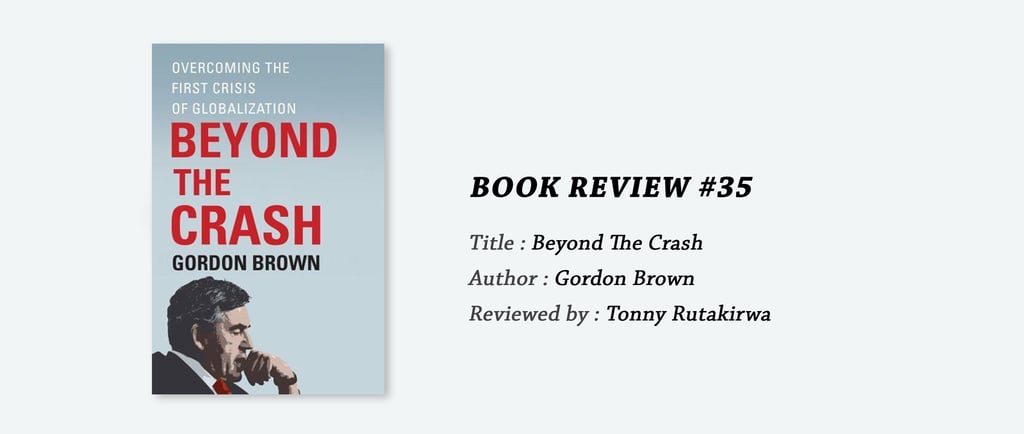

Gordon Brown, who was once the prime minister of the United Kingdom, had a profound belief in his idea that the financial crisis of 2007 to 2010 could indeed be reversed with the right strategies and collaborations. Gordon’s esteemed career included serving as the chancellor of Exchequer for an impressive span of nearly ten years, during which he garnered extensive experience and insight into the complexities of national and global economics. His vast reading and comprehension of economics, finance, and the vast realm of globalization enabled him to formulate a comprehensive plan to address the economic turmoil that gripped the world at that time.
In his book, Gordon delves deeply into his philosophy behind writing Beyond the Crash, motivated by his conviction that the existing crisis could be simply turned around. He emphasized the importance of world leaders needing to collaborate closely, recognizing that isolated efforts would be insufficient to tackle such a widespread issue effectively. Gordon firmly believed that failure to reverse the crisis would lead to a decade-long period filled with job losses and hindered economic growth that would affect millions around the globe.
The narrative presented in the book outlines not just the factual events but intricately weaves the story of how he envisioned reversing the crisis. Gordon articulated these thoughts in a clear and compelling manner, aiming to educate and inspire. He clarified that the purpose of the book was not to claim sole credit for any efforts aimed at saving the world—but rather to acknowledge and laud the contributions made by his fellow world leaders during these trying times.
However, his journey was somewhat cut short, as he faced interruptions that prevented him from effectively realizing his vision within the political arena. His departure from the forefront of politics meant he could no longer coordinate the various recovery policies that needed to be executed, leading to a situation where those strategies fell apart and into disarray. This unfortunate series of events illustrates the profound impact his leadership had and how his leaving created a significant void, raising questions about the direction and effectiveness of subsequent leadership.
Gordon Brown’s most notable achievements were undeniably evident in the months following the catastrophic collapse of Lehman Brothers in September 2008. At that critical juncture, he assumed an unmatched role as the de facto leader, as the world's economy spiraled into a free-fall. Brown recognized the urgent need for significant action: he understood that rescuing the banking system would require a formidable injection of capital. Simultaneously, he realized that efforts to restart the economy necessitated a considerable stimulus, making it imperative for governments to act swiftly and decisively to restore confidence and stability.
Within the confines of this insightful book, Brown positioned himself as an expert, recognized for his remarkable financial acumen as well as his pivotal role in driving the critical discussions that led to the consequential decisions made during the crisis. Despite numerous authors having written on various topics, few have ventured into a comprehensive discussion about the essential actions the global community must undertake to emerge from the dark abyss created by the economic downturn.
Insights In This Book
This remarkable book serves not only as a thorough explanation of the events that transpired but also provides valuable guidelines on how to avert similar financial calamities in the future. Gordon meticulously outlines the sequence of events that he believes ultimately contributed to the devastating crisis. Moreover, he articulates the historical precedents leading to the crisis, such as the ill-fated global leaders conference in 1933 that failed to address the Great Depression effectively.
Beyond the Crash elucidates the critical notion that global economic problems necessitate global solutions and cannot be confined within arbitrary borders. Gordon distinguishes his perspective by offering specific recommendations regarding how the next phase of globalization can be effectively managed to ensure that the economy truly works for all people, not just the elite few. His message evokes the need for cooperation and concerted effort amongst nations to both confront and navigate the complexities of a globalized economy.
Furthermore, this book aids readers in comprehending the nuances of the economic landscape and what has genuinely transpired in recent years. It underscores the significance of many different regions globally contributing to the rebalancing act required for the economy to function effectively. Notably, Brown shares firsthand accounts and insights gathered throughout his career regarding events that led to successful international collaborations on economic issues, underscoring the importance of unity in crisis management.
Specific and practical suggestions are presented, detailing various ways in which different nations across the globe can actively participate in securing sustained global growth and mitigating poverty. The author emphasizes in this book that a well-functioning banking system and vibrant markets necessitate a shared moral foundation amongst all participating entities, promoting ethical practices in financial operations and governance.
In his work, the book meticulously tracks the response of the United Kingdom government following the announcement of the author’s strategic recapitalization plan. Additionally, it focuses on the pivotal events surrounding the 2009 G-20 London Summit, detailing the behind-the-scenes diplomacy essential for reaching the consensus required for the coordinated actions unveiled during that historic meeting.
Later sections of the book delve into the challenges encountered post-2010 in addressing global unemployment rates and catalyzing growth on an international scale. Brown concluded by stressing the necessity for all nations to engage in united action to effectively mitigate global trade imbalances and ensure equitable opportunities for economic prosperity.
Wrapping It Up
Brown’s book is firmly centered around pressing global issues, deliberately steering clear of superficial political gossip. Throughout, the book emphasizes the lessons that past historical events have imparted, providing readers with a thoughtful understanding of how these experiences can inform future actions.
It stands as a manifesto urging that globalization is an inevitability that cannot be ignored or shut out by nations. Beyond the Crash emerges as an insightful, instructive read that consolidates clarity regarding global growth dynamics, making it a highly recommended resource for anyone invested in understanding our contemporary economic landscape.