
A-Z of Himalayas Beauty | Himalayas Tourism
Discover the breathtaking beauty of the Himalayas in our comprehensive A-Z guide. Explore tourism tips, stunning landscapes, and the rich culture of the Himalayas. Experience the adventure and tranquility of this majestic region. Himalayas beauty. Himalayas Tourism.
MONTHLY STATEMENTS
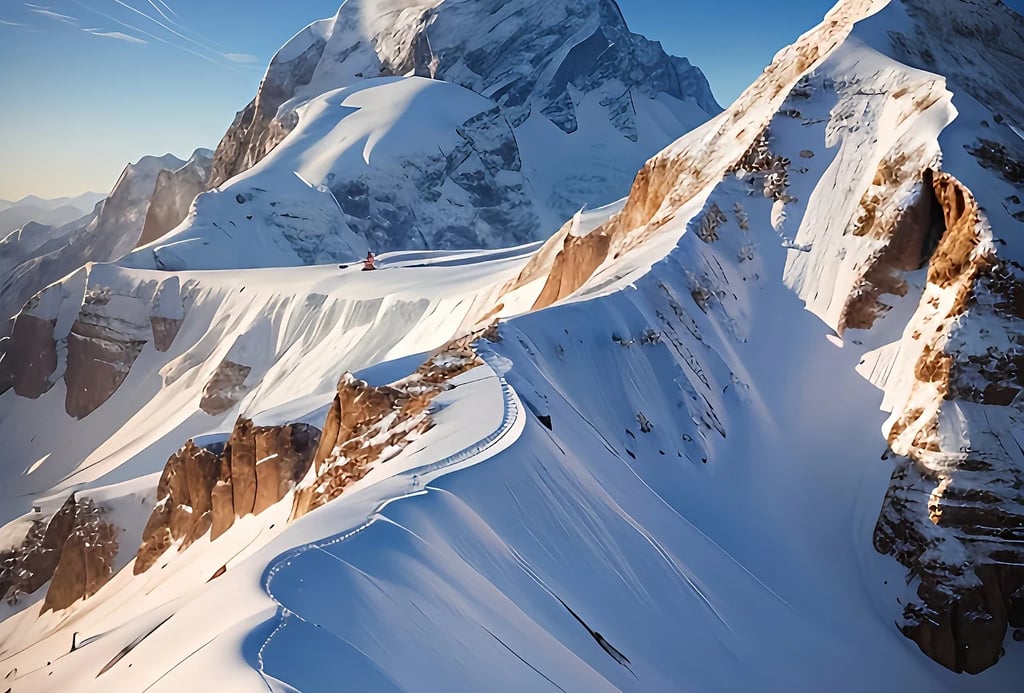
Nature is a beautiful wonder, isn’t it? We see different breathtaking landscapes and some unique structures that we can’t just explain. Amongst these wonders of the earth are the Himalayas.
The Himalayas is the home of some of the highest peaks we have on earth. Starting in Pakistan and extending across Nepal, Bhutan, India, up until China, the Himalayas is an amazing landscape of glaciers, deep valleys, and mountains measuring about 1,500 miles long. Plus, it has Mount Everest, which is about 8,484m above sea level.
Even more, in addition to nine of the highest peaks on the earth, the Himalayas have 30 mountains and are packed with geographical marvels, culture, and impressive world records.
A lot of people have actually been up close and personal with the Himalayas. However, if you think doing the trek is not for you, then this article right here is the next best thing.
First, When Is The Best Time To Travel To The Himalayas?
As mentioned earlier, the Himalayas cover a lot of land space. However, depending on the altitude and precise location of the trek, the best months you can visit the Himalayas are late in October all through till early in May. But, if you’re thinking of going to Ladakh, then you might have to wait till May or September since that’s when the tourist facilities are open.
So, now you know when you can travel to visit the Himalayas. Let’s go through the A-Z of this natural wonder, shall we?
A 70 Million Years Old Beauty
It’s believed that the Himalayans were formed about 70 million years ago by a gigantic collision between the Indian and Asian tectonic plates, or landmass to put it simply.
This colossal collision, which continues to this day, caused the Earth's crust to buckle and fold, pushing up the massive mountain range we know as the Himalayas. This ongoing tectonic activity is also responsible for the region's seismic instability.
You Can Find The Highest Mountain Range In The World
The Himalayas is a gigantic mountain range with 30 peaks that stand about 24,000 feet above sea level and have a width averaging 200 miles. Amazing, isn’t it? Well, the fact is that the Himalayas actually cover approximately 0.4% of the Earth’s surface area.
Beyond its sheer size, the Himalayas play a crucial role in global climate patterns, influencing monsoons and acting as a natural barrier that shapes weather systems across Asia. Its vastness is truly unparalleled.
Who Named The Mountains?
So, where did the names of the mountains come from? They must have come from somewhere or someone, right?
Well, in 1865, Sir Andrew Waugh named Mount Everest after his predecessor Sir George Everest, the Surveyor General of India between 1830 and 1843.
The locals have their own names for Everest. The Sherpas and Tibetans call it “Mother Goddess of the Earth” or Chomolungma in their language.
Many other prominent peaks in the range also carry names derived from local languages, reflecting the deep spiritual and cultural connection the indigenous communities have with these towering natural monuments. Each name often tells a story or describes a characteristic of the mountain.
The Himalayas Are Alive
According to scientists, the Himalayas are actually alive. Research shows that the mountains are continuously growing in size, which is as a result of the movement of the Indo-Australian plate 20mm every year.
What this means is that these mountains are actually getting taller every year. Wonderful, isn’t it?
This continuous uplift means that the landscape is constantly evolving, leading to dynamic geological features and contributing to the region's unique biodiversity and challenging terrain. It's a living, breathing geological marvel.
Myths And Legends
We mentioned that the Himalayas cut across Pakistan, Tibet, Bhutan, Nepal, and India, right? Well, because of this, there have been different myths and folklore surrounding the mountain range.
According to Hindu mythologies, the Himalayas is said to be the home of the God Shiva. The Nepalese, on the other hand, named the mountains “Sagarmatha,” meaning “Forehead of the Sky” or “Goddess of the Universe.”
There’s also a Sherpa legend that talks about a Yeti. The Yeti is described as a monster that looks like an ape and wonders around the Himalayas. Now, that’s scary. This legend has, over the years, been integrated into Western pop culture.
These rich narratives are woven into the fabric of daily life for the millions who live in the shadow of these mountains, influencing art, religion, and local customs. The Himalayas are not just a physical presence but a spiritual one.
Source Of Many Rivers
The Himalayas is the source of numerous rivers like the Yellow Rivers, the Yangtze, the Mekong, the Brahmaputra, the Indus, and the Ganges. The water from the Himalayas serves as a source to three main Southeast Asian river systems; Ganga-Brahmaputra, Yangtze Basin, and Indus Basin.
What’s more interesting is that these rivers actually existed long before the Himalayas. So, what was their source before the Himalayan peaks? Well, nobody really knows!
These rivers are lifelines for billions of people, providing water for drinking, irrigation, and hydroelectric power across South and Southeast Asia. The glaciers and snowmelt from the Himalayas are critical for sustaining these vital water sources.
Colored Pencils On Everest’s Peak
The first people to ever get to the peak of Mount of Everest were Edmund Hillary from New Zealand and Tenzing Norgay from Nepal, and this was said to be in 1953. Also, it was said that they both spent about 15 minutes on the top of Everest.
Rumor has it that, within this time, Tenzing had enough time to bury red and blue pencils that belonged to his daughter on the peak of Everest. Want to go there and find out if it’s true?
Whether fact or folklore, this charming anecdote adds a touch of human connection to the otherwise formidable peak, symbolizing the personal triumphs and sacrifices made in the pursuit of reaching the world's highest point.
Home To Exotic Wildlife
The Himalayas have unique geography and climate. As a result, it has become home to a lot of rare species on earth.
You can see mountain goats, Tibetan sheep, wild goats, snow leopards, and even musk deer leaping and jumping around the mountains.
The diverse ecosystems, ranging from subtropical forests at lower altitudes to alpine tundras and permanent snowfields higher up, support an incredible array of flora and fauna, many of which are endemic and critically endangered, making conservation efforts paramount.
A Sanctuary For Humans
Fine, the Himalayas have harsh conditions. However, some people still stay there; it has become their sanctuary. Most of these people stay in the mountain monasteries.
Also, since Hinduism, Islam, and Buddhism are predominant in the area, the Himalayan mountains serve as a good location for spiritual explorations and religious teachings. Even more, though some of these monasteries look 21st century, they are said to have been there for more than 1000 years.
The serene and often isolated environment of the Himalayas has long attracted ascetics and spiritual seekers, fostering a unique blend of religious practices and philosophical traditions that continue to thrive amidst the rugged beauty.
The Climb To Mount Everest
Climbing Mount Everest is not for the faint-hearted. It is said that about 150 people have died trying to get to the peak of Everest, which puts the death rate at 9 percent.
While some people won’t think twice before “Hell No!”, some see the climb through unstable terrain and frigid climate as both thrilling and dangerous. That is why more people are trying to get to the peak. The feeling must be like no other.
Despite the inherent dangers, the challenge of Everest continues to draw adventurers from around the globe, each seeking to test their limits against nature's ultimate frontier, driven by a desire for unparalleled achievement and breathtaking views.
The Impact of Climate Change
Unfortunately, even these majestic mountains are not immune to global challenges. The Himalayas are particularly vulnerable to climate change, with glaciers melting at an alarming rate. This has significant implications for the water supply of downstream populations and the stability of mountain ecosystems.
Scientists and environmentalists are working tirelessly to monitor these changes and advocate for global action to protect this vital region, ensuring its beauty and resources can be preserved for future generations.
To Wrap It Up
The Himalayas are really a thing of beauty. Though it is the youngest mountain range, it seems to be as old as the earth itself.
Also, it is not only mesmerizing but also mystic and majestic. The sight alone would leave you in awe. Even more, it has become a part of pop culture and many explorations for years now.