
I Know Why the Caged Bird Sings by Maya Angelou | A Book Review
Explore this in-depth book review of 'I Know Why the Caged Bird Sings' by Maya Angelou. Discover the themes, characters, and impact of this powerful memoir that resonates with readers worldwide.
BOOK REVIEWSMONTHLY STATEMENTS
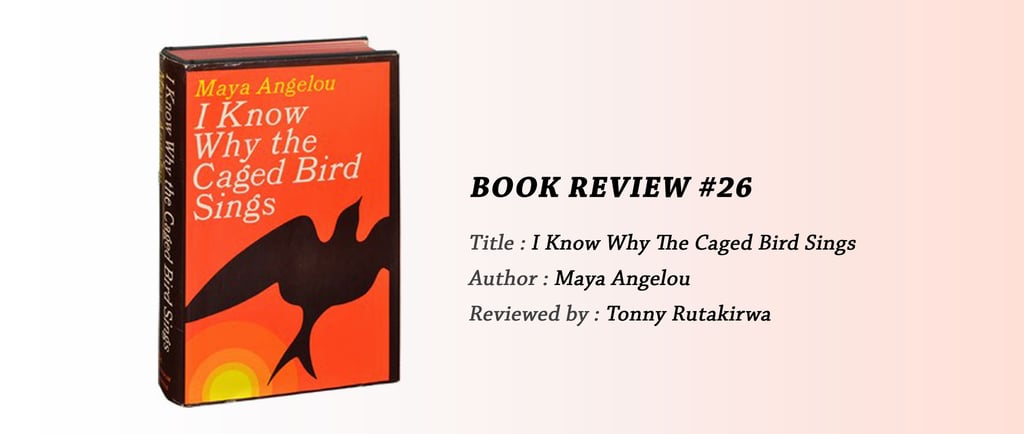
Autobiographies are mostly written to get one’s story told or to share their triumphs and defeats in a bid to help inspire others. Additionally, autobiography serves as a cautionary tale for people of all ages. Authors write their biography for readers to learn from their lives, often sharing both the joy and the pain they have experienced. Some authors, however, write their autobiography to leave a detailed account of not just how they have lived their lives but to serve as a legacy for future generations. They reflect on their achievements, struggles, and the things they overcame in life, thereby granting insight into their personal journeys and the lessons learned along the way.
I know why the caged bird sings is an autobiography written by the prolific author and poet Maya Angelou, which gives an intimate portrayal of the first sixteen years of her life. Her autobiography was designed to be a transformative piece, written in scenes that vividly recount her experiences and the tumultuous journey she underwent; it tells her stories through a lens of resilience and strength, stemming from what she referred to as "the general darkness just beyond the great blinkers of childhood." This phrase captures the essence of her innocence challenged by the harsh realities of racism and trauma.
The title of this profound book, I know why the caged bird sings, derives from the first line of the third stanza of a poignant poem called Sympathy by Paul Dunbar. The title was carefully chosen to symbolize the many racist stereotypes that surrounded her during her childhood, as well as the longing for freedom and expression. By writing this groundbreaking book, she was not only able to break those barriers that sought to confine her spirit, but she also empowered countless others to acknowledge their own struggles and rise above them.
The Birth of The Book
The first volume of 'I know why the caged bird sings' is a remarkably well-detailed and poetic description of Maya Angelou’s life up until she reached the age of 17. The book offers not just a narrative of personal experiences but also encapsulates a broader historical context, describing the cruelty, indignity, and injustice that African Americans faced during the 1930s and 1940s. It stands as a testament to the enduring spirit and resilience of the black American community, serving not only as a chronicle of adversity but also as a celebration of their spirit, courage, and humor, showcasing the strength found within challenges.
Having read Dunbar’s poignant poem, readers should have an insightful perspective into the compelling story this book tells. I know why the caged bird sings was nominated for a national book award not solely for its literary merit, which is evident in its eloquence and depth, but also because it was a candid exploration of authentic experiences that resonate with many. However, it’s important to note that while the book highlights moments of beauty and growth, it also details the horrific and gruesome rape of a young girl, which may make it unsuitable for preteens, as it tackles complex themes that require maturity to fully understand.
What’s in This Book?
The book begins with a vivid recount of how the author and her brother, Bailey Jr., were sent to the small town of Stamps, Arkansas, at a tender age when she was just three years old. They were placed in the care of their grandmother, Annie Henderson, a devout and God-fearing woman who was also a business owner of a grocery store, located in the heart of an African American community during a time of economic depression. This setting plays a critical role in shaping their childhood experiences and interactions.
In Stamps, they were raised under the stern but loving guidance of their grandmother and their disabled uncle Willie. Although their grandmother, whom they affectionately called "Momma," was a truly beautiful woman both inside and out, Maya always found the way she handled racism to be perplexing and complex. This dynamic illustrates the challenges faced by families dealing with prejudice while simultaneously fostering a nurturing environment.
The book poignantly illustrates how Maya endured the profound ache of abandonment and the pervasive prejudice of the community she found herself in. At the tender age of eight, when she finally returned to her mother’s side in St. Louis, she faced the unimaginable horror of being raped by a man far older than herself, an experience that would haunt her and leave deep scars for the rest of her life. Additionally, she had to grapple with the challenges and the societal consequences of this traumatic act, facing isolation and distress.
After a turbulent period spent moving from Stamps to St. Louis, then on to Oakland, and finally San Francisco, Maya’s life was profoundly shaped by the extraordinary mentors she encountered along the way, including the unconditional love from her family members. It was only upon moving to San Francisco that she began to truly learn how to love herself, thanks to the kindness received from others and the strength of her own resilient spirit.
From the very beginning of this powerful book, Maya carries her readers along through her childhood, highlighting pivotal moments and cherished memories that collectively shaped her identity and contributed towards her evolution as an author. It showcases how she grew up in a world that often valued a particular race over her own, having to endure the constant threat of KKK and the other forms of racial terror. Moreover, she had to face the disrespect and derogatory treatment meted out to her and her family by white individuals, which illustrates the ongoing battle against systemic racism.
As a mechanism to survive within a world filled with hostility, Maya discovered solace in reading. She fell deeply in love with the works of Shakespeare at a young age, becoming captivated by the beauty of the language and the complexity of the characters. Furthermore, her ability to read and comprehend literature at such a young age challenged and broke the misconception that many held—that black women are incapable of bettering their lives through education and self-discovery, thus shining a light on the importance of intellectual empowerment.
In Conclusion
This book addresses the difficult and pressing issues of rape, molestation, and racism, contextualizing these themes within the broader narrative of the trials and tribulations of growing up. The author, with her eloquent style and unflinching honesty, tries to present her experiences directly, without indulging in unnecessary graphic detail, allowing readers to engage with the emotional truth of her struggles. I know why the caged bird sings is not merely a story; it is a transformative read that illustrates how one can indeed break barriers through resilience, a strong will, and the support of the right mentors and allies.
Overall, I know why the caged bird sings remains a profound and captivating narrative that resonates with readers, emphasizing the possibilities of self-discovery and empowerment amidst adversity.