
Why Should We Stop Pollution? 8 Reasons to Stop Pollution, a Guide | Environmental Protection
Why should we stop pollution? Here are the types of pollution, and the main reasons we should look to limit or prevent pollution. All in one helpful list! Reasons to stop pollution. Environmental Protection.
MONTHLY STATEMENTSCLIMATE CHANGE
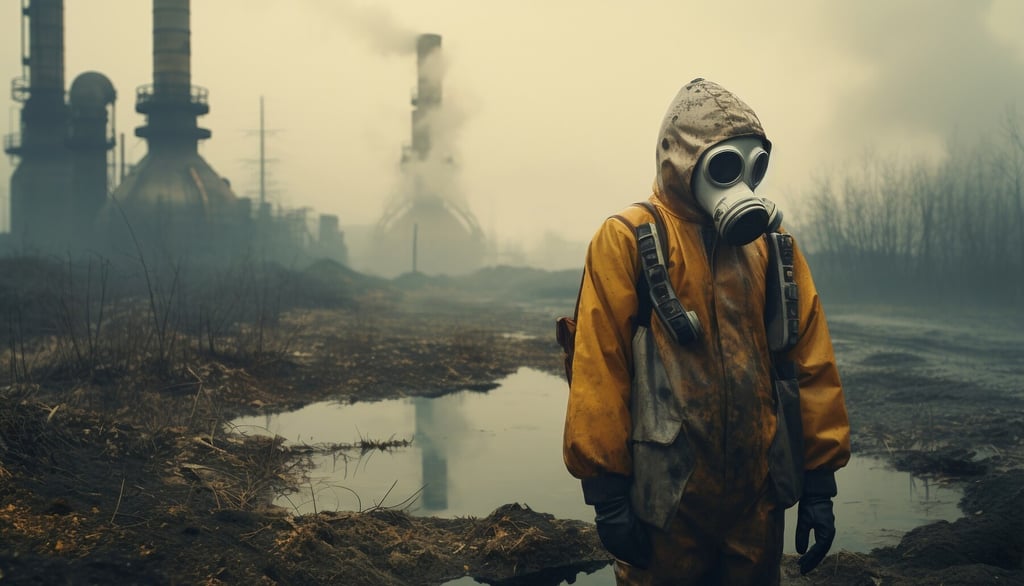
Pollution is a cold topic that nobody really feels comfortable talking about, but it exists. Currently, pollution has reached a point where it has started to affect the daily lifestyle of every being on the planet and has already made the lives of the future generation questionable.
While everyone knows the variety of pollution on its own is bad for everyone, there are plenty of other reasons why we should stop pollution.
I talked about how charities can help combat climate change in my March 2020 statement, so in this month’s statement, I thought I’d dive further into that topic to give a clearer understanding of why we should stop pollution and further establish the Rutakirwa Foundation’s mark on this aspect of climate change!
Here’s the quick list, then we’ll get into the details...
Why Should We Stop Pollution? Below are nine serious reasons why we should stop pollution -
Reduce economic costs
Reduce the effects of global warming
Prevent animal extinctions
Limit the causes of serious health diseases
Reduce the number of birth defects in animals and humans
Limit risks for future generations
Lessen disturbance in the ecosystem
Care for our natural resources
So that’s the roundup, but there’s more to it than that. So let’s dive into some of the details around each of those reasons!
To Reduce Economic Cost
This reason perhaps might be the only reason that attracts big corporations to stop pollution.
Surprisingly, stopping pollution does help to reduce certain financial costs. Economically, every country spends a huge amount on waste management, cleanup, and other health awareness programs, mainly caused by pollution.
Even certain programs like a beach cleanup, city clean up, and several other programs are organized in order to reduce the effects of pollution.
These all add up to the high financial cost for a country. So by stopping pollution, the cost spent on pollution management can be reduced to a greater extent, boosting economic growth through other potential investments.
The main reason for global warming
Global warming has become a common topic of discussion everywhere nowadays. Even if you’re aware of the impact, the sudden climatic changes and the increasingly warmer days we experience are caused by global warming.
In simple terms global warming is the process of the globe becoming warmer. Studies have shown that the human body may not survive outside of its normal temperature range - known as “thermoregulatory mechanisms” of the normal temperature, which global warming is creating.
Although global warming takes time, the earth temperature has increased by 0.6°C–0.9°C from 1905 to 2005, and models that provide predictions estimate a further increase of between 2°C–6°C by the close of the 21st century.
Not to sound dramatic, but this is rather dramatic. It poses a real risk to future generations and the future of our home.
“the earth temperature has increased by 0.6°C–0.9°C from 1905 to 2005”
Animals are becoming extinct
Global warming is sadly destroying the habitats of animals in the northern hemisphere. Especially habitats where animals such as penguins and seals live.
A few years down the line, the future generation may not even know or see what these animals are or were.
Over the past eleven centuries, many animals have become extinct because of pollution and related causes. Animals like sea mink, Tasmanian tiger, and passenger pigeon are some animals that have become extinct because of pollution.
The main cause of serious health diseases
Pollution is becoming the number one reason for many recent diseases and several other medical conditions. Pollution has caused too much heat and rain, sometimes even acidic rain. Different forms of allergies, rashes, asthma, and infections are rising because of pollution.
One good example can be found in Beijing, China, where people find it hard to breathe - or even see - because of air pollution.
Air pollution alone contributes to many respiratory diseases such as lung cancer. Not that long ago lung cancer was mostly a disease that affected and was caused by smoking. But nowadays even if a person has never smoked in their life, lung cancer can still develop potentially because of the effects of air pollution.
Similarly, polluted water can carry several water-borne diseases, because of water pollution, around 1.2 billion people don’t have clean water to drink or use for their daily lifestyle.
And when it comes to soil pollution, contaminated soil can transmit toxins and chemicals into the food crops and thereby transferring into the food we eat.
Similarly, the bees that keep the fruits and vegetables we eat alive through pollination are dying because of pollution.
This happens because of the harsh chemicals and toxins that are used in the soil and crops. And sadly, without these pollinators, plants find it difficult to produce delicious fruits and vegetables that we could enjoy eating.
Also, it’s good to mention that air, soil, and water pollution alone roughly causes 40 percent of the global death population. So as such pollution has a direct negative impact on our lives and health, even if we don’t come into contact with it directly.
“Air pollution alone contributes to many respiratory diseases such as lung cancer”
Animals and humans are born with defects
Although this might sound strange, some animals are being born with defects mainly because of pollution.
One best example is the sea turtles that are born with two heads which is becoming a common occurrence. Many scientists believe this is caused by water pollution in which these turtles are being born.
This applies to humans as well, the severe water pollution and drought are major reasons for malnutrition children to be born. Especially in Africa and certain parts of India water pollution is so severe that kids are dying from malnutrition.
The future generation is at risk
In the past 10 years, the average global temperature has risen by around 0.74°C, which is about 3°F.
This rise can lead to a natural shortage of resources for human use that may become exhausted. Sadly even the ozone level may not exist in another 10-15 years. This means that our children’s kids might struggle to survive in what could be a very different world.
Disturbs the ecosystem
Pollution - or more specifically - water pollution upsets the ecosystems on both land and water.
This has already begun to directly kill animals and plants... and even encourage the growth of toxic algae. The famous 'Red Tide Outbreak' is mainly caused because of pollution. Not to mention viral outbreaks such as the Coronavirus caused by effects such as unnatural tampering with the ecosystem and overpopulation.
Even pollution that comes in the form of light and sound/ noise is harmful to animals. One best example could be seen through the turtle hatchlings. These turtle hatchlings depend on moonlight to show them the direction or way to the ocean, just after they come out of the eggs.
What happens now is that the light from beachfront properties misleads these hatchlings in the wrong direction - mistaking mood lighting for moonlight. These misled hatchlings are prone to a greater threat from predation - because of light pollution.
“Even pollution that comes in the form of light and sound/ noise is harmful to animals”
Similarly, animals like whales use sound to communicate, which has become difficult now with the heavy sound pollution every seashore, large vessel, and coastline experiences.
Although this may seem less important for humans or even might not directly impact us, it’s important to remember that ecosystems are a finely balanced machine, and that balance keeps the world running in a natural state.
Resources are finite
Most of the natural resources that we take for granted are not infinite. Especially drinkable water, which is essential for human survival. Even though our planet is made out of 71% water, only three percent of it is drinkable. The other 97% is saltwater which can only be consumed after being treated.
So if we continue to pollute our greater water system, we’ll potentially end up with no safe water for consumption.
The same applies to the soil and air we pollute. With no safe water to drink, no safe food to eat, and with no safe air to breath - we could effectively be the architects to our own extinction.
To finish
As you can see, pollution may not always directly impact us, but we all are surely being affected by it every day of our lives.
Similarly, animals that share this space with humans on earth are also directly or indirectly getting affected by pollution.
Overall the sustainability of future generations, the continuation of the human race, the existence of different species of animals, and even the survival of both human and animal populations are at risk - because of pollution.
As such it’s high time for us to start making small changes towards stopping pollution once and for all. Help The Rutakirwa Foundation make those changes... you can support the foundation by donating to our good causes and charitable work directly via this link. Only give what you can afford.
This is where we put funds to good use for environmental, social, cultural, and climate - related causes, for the good of all of us.
“It’s high time for us to start making small changes towards stopping pollution once and for all”