
Sapiens: A Brief History of Humankind by Yuval Noah Harari | A Book Review | Sapiens Book Review
Discover an insightful review of 'Sapiens: A Brief History of Humankind' by Yuval Noah Harari. Explore key themes and ideas that shaped human civilization in this comprehensive book analysis. Sapiens Book Review.
BOOK REVIEWSMONTHLY STATEMENTS
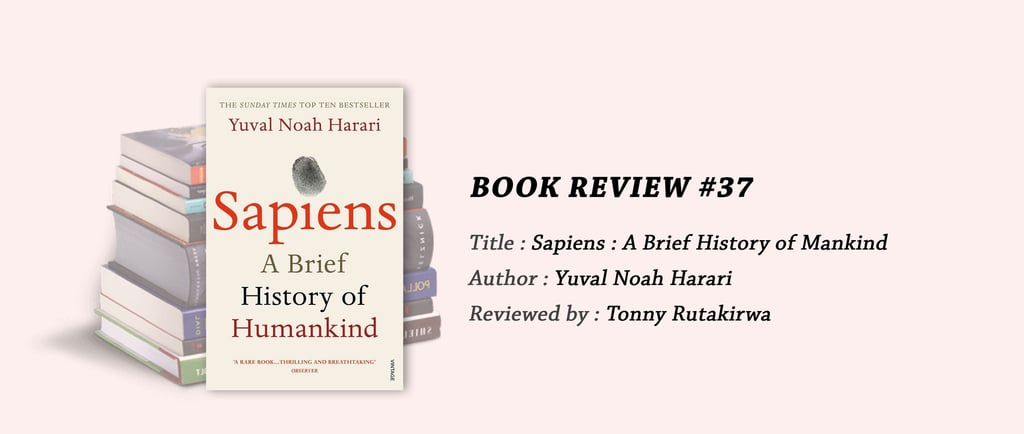
What is the pivotal role of Biology in the intricate process of human evolution? Why was humankind uniquely positioned to dominate the world through ages? Where is the modern technology and its rapid advancements driving us as a society and species? These profound questions represent only a fraction of the main inquiries that are meticulously addressed by Sapiens: A Brief History of Humankind. This thought-provoking book, authored by Yuval Noah Harari, was first published in 2011 in Hebrew. Following its success, it was subsequently published in English in 2014, where it garnered critical acclaim and resonated deeply with readers worldwide. In a broad context, the book rigorously examines the evolution of humankind, tracing our journey from the prehistoric Stone Age to intricate developments in the contemporary century, all as guided by the principles of natural sciences.
The author, Yuval Noah Harari, emerges as a well-established and canonic figure in the discipline of History. He holds a prestigious PhD in History from the esteemed University of Oxford. Currently, he serves as a lecturer at the renowned Hebrew University of Jerusalem, influencing a new generation of scholars and minds.
The book predominantly places its focus on the journey of Homo sapiens. It is remarkably organized into four main sections that meticulously cover various epochs of evolution. The first section delves deeply into the Cognitive Revolution, exploring the pivotal period during which Sapiens evolved the capacity for imagination, which allowed for the development of complex societies and cultures. The second section evaluates the profound implications of the Agricultural Revolution, a transformative shift where nomadic hunting and gathering lifestyles gave way to settled agricultural practices. The third section intricately examines the unification of humankind, wherein humans consolidated their political organizations to form expansive and unified empires, thereby altering the global landscape. The last section offers an enlightening look at the Scientific Revolution, maintaining its focus on the emergence and profound development of objective science, which forever changed our understanding of the world.
Within the framework of these four sections, the author embeds a myriad of other historical events and phenomena that are critical to understanding the broader narrative of human history. For instance, he thoroughly discusses the remarkable development of language and how this crucial evolution catalyzed in promoting cooperation and societal bonds among early human communities. Additionally, Harari engages with the topics of religion, money, and credit, demonstrating how these foundational constructs are indispensable in shaping the trajectory of the sapiens.
The principles of evolutionary biology form the bedrock of Harari's comprehensive analysis. He articulately perceives biology to be the fundamental framework that imposes limits upon the possibilities of what humankind can realistically aspire to achieve. Upon concluding the book, he acknowledges with a nuanced perspective that modern technology has evolved to become more powerful than most individuals truly understand. With unprecedented breakthroughs in genetic engineering, alongside rigorous research studies focused on non-organic life and concepts of immortality, humankind may potentially wield the extraordinary power to either endanger existing species or even create entirely new ones.
The book is structured to flow chronologically, a format that significantly enhances its readability. This stylistic choice allows readers to seamlessly navigate through the narrative, finding it easy to follow the account without losing track of essential arguments. If a reader pauses and resumes reading the book later, whether on the same day or a different one, the chronological order of the text facilitates a smooth transition back into the story, eliminating any struggles to recall previous readings.
The majority of books dedicated to examining the vast history of humanity typically adopt either a strictly biological or historical methodology. An interesting and unique characteristic of Sapiens is its remarkable ability to combine these two distinct approaches in a sophisticated examination of how humankind has indelibly affected the global ecosystem. This multi-faceted exploration leads readers into a thought-provoking tour, compelling them to reflect upon how our species has endured and adapted through thousands of years against various challenges.
Is the book worth your valuable time and investment? Absolutely Yes! It has unquestionably earned itself a prominent place in the collective minds of millions who have taken the time to read it. Among these readers is the renowned Bill Gates, who notably ranked the book among his list of ten favorite books. The book has also garnered numerous positive reviews from many esteemed individuals, including Pulitzer Prize-winning author Jared Diamond and former U.S. President Barack Obama, both of whom have praised Harari's insights.
The widespread acclaim of the book among readers has ignited a surge in its translations, making it available in numerous languages across the globe. As of June 2017, the book had undergone translations into an impressive 45 different languages, amplifying its global value and ensuring a general understanding that transcends cultural and linguistic barriers, making it accessible to diverse consumer segments.
When deciding on which books to read, a critically influential factor for many individuals is knowing whether the book has received any notable nominations or prestigious awards. In an admirable recognition, the Royal Society of Biologists shortlisted Sapiens for their coveted awards in the year 2015 in the United Kingdom. Furthermore, The Guardian placed the book in their esteemed list of "best brainy books of the decade." In China, the book achieved acclaim by winning the Wenjin Book Award, and Sapiens also succeeded in making its mark by reaching the The New York Times best-seller list. Additionally, the book was celebrated as a bestseller across various markets, including France, the United Kingdom, South Korea, and China among other countries, reflecting its wide-ranging impact and popularity.
“I would recommend this book to anyone interested in a fun, engaging look at early human history…you'll have a hard time putting it down.” — Bill Gates