
Steve Jobs Biography by Walter Isaacson | A Book Review
Explore this in-depth review of Walter Isaacson's biography on Steve Jobs. Discover insights into the life and legacy of one of the most influential figures in technology. Steve Jobs Biography. Book Review.
BOOK REVIEWSMONTHLY STATEMENTS
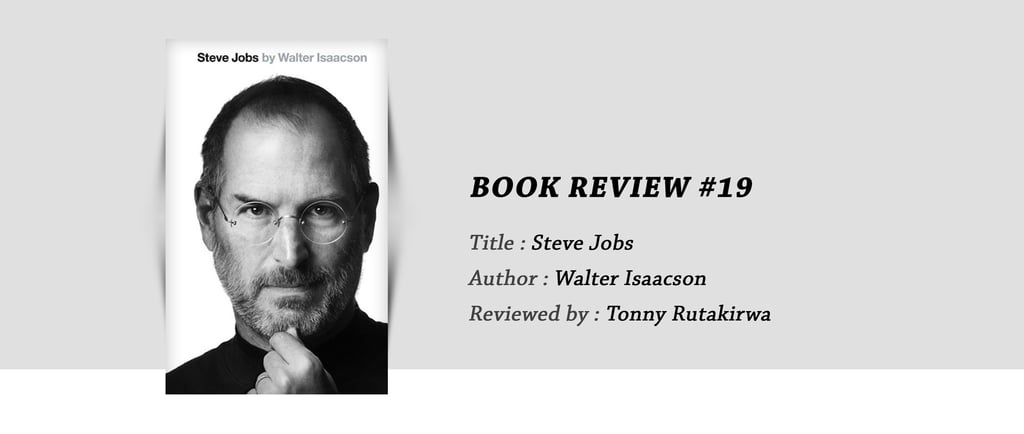
Steve Jobs is an insightful biography meticulously crafted by the talented author Walter Isaacson that explores the intricate life, significant achievements, and remarkable encounters of the legendary Apple co-founder. The writer devotedly gathered critical and enlightening information from a myriad of interviews with Steve Jobs, aiming to piece together the narrative of his extraordinary life and contributions to technology and society.
What Is In This Book?
Walter takes a much closer look in the first chapter of the book, delving into the formative childhood of Steve Jobs, highlighting the dual parenting situation he navigated as he grew up. His adopted father, Paul Jobs, was an insightful engine technician who took the time to teach Steve valuable lessons in engineering and design. The story of “Blue Box” stands out as the first project that he started alongside another Steve, showing the early spark of innovation that was unfortunately snatched away from them.
Steve Jobs made the bold decision to drop out of Reed College to immerse himself in the burgeoning technology scene in Silicon Valley with his friend Wozniak. It was during this time that he founded “Apple Computers” after a serendipitous moment returning from an apple orchard one fateful day. By utilizing the connections he had fostered from his previous jobs, he managed to get Apple Computers up and running smoothly despite numerous challenges. In the midst of enhancing Apple’s product lineup and achieving immense success, he entered into his first significant relationship with Chrisann Brennan, which became an important part of his personal story, as pointed out by the writer.
Despite the remarkable success of Apple II, Steve found himself dissatisfied with its results, leading him to collaborate with Xerox. Although his eccentric behavior often led to losing control over massive projects, which resulted in his demotion by Apple management, he continued to innovate and push boundaries.
Even though he was relegated from his prominent position, he regained full power and control over the emergence of the Mac project. His quirky yet captivating personality encouraged many of his employees to learn to assert themselves and express their creative ideas. This unique attitude of his, combined with the stunning design of the Macintosh, vividly illustrated Steve’s unwavering love for perfection. He was not just a visionary but also a highly competitive individual, striving to excel in every area where he had the opportunity, which ultimately led to him being named “Machine of the Year” by Time Magazine—a testament to his impact on the world.
Read Between The Lines
Through the chapters, the author reveals Steve’s complex collaboration with Bill Gates, a relationship that abruptly deteriorated when Microsoft unveiled Windows, a product that mirrored the operational framework of the Mac. Walter skillfully narrates that Steve made the decision to leave Apple and embark on a new venture called “NeXT,” aimed at addressing educational challenges. In a twist of irony, he also brought along some of his former employees from Apple, which, as time unfolded, proved to be an ill-fated choice by the end of the day.
Moreover, in 1986, Steve Jobs began to actively search for his family and relatives, reconnecting with them after many years apart. This journey culminated in a deep personal transformation, leading him to marry Laurene Powell and together they welcomed three wonderful children into the world, thereby expanding his legacy.
As the narrative progresses, the book recounts Steve’s momentous return to Apple; he immersed himself in work, driving intense focus on revitalizing the company, making a pivotal deal with Microsoft that significantly boosted Apple’s stock prices. Steve then shifted his focus to fewer but larger projects, believing strongly in the power of effective marketing to amplify product success. His relentless tenacity and unwavering dedication ultimately propelled him to the influential title of CEO of both Apple and Pixar, showcasing his unparalleled impact on both companies.
Additionally, it is worth mentioning that Steve had a profound appreciation for music, particularly from artists like Bob Dylan and Yo-yo Ma, who graciously consented to perform at his funeral, underscoring the deep connections he cultivated throughout his life.
In 2003, Steve was faced with a daunting diagnosis of a rare form of cancer. Nevertheless, he made the controversial decision not to undergo surgery or conventional medications. His health challenges prompted him to accept an invitation to deliver a commencement speech at Stanford on 12 June 2005, resulting in one of the most memorable and impactful speeches in modern history. This speech became a powerful narration of his lifetime—his myriad of experiences, notable failures, his relentless battles, and profound perceptions of love, loss, and encroaching death.
He also poignantly sheds light on the emotional turmoil brought on by his sudden diagnosis and battle with cancer, which served as a catalyst for accepting the commencement speech. This moment marked one of the closest encounters he had with death, reflecting his journey of coming to terms with his mortality but not without first ensuring that he had put his affairs in order and shared his wisdom.
Wrapping It Up
In Steve Jobs’ remarkable speech, one could easily notice how his vast experiences and the environments he traversed throughout his life profoundly shaped his principles and values, ultimately guiding him toward achieving great heights.
He emphasized the importance of time as a precious and limitless resource that every individual possesses. He passionately asserted that to truly live by one’s own unique set of rules is not just necessary but vital, discouraging the waste of precious time trying to live for or impress others.
In a reflective moment, Steve shared how in the mid-1970s, he found himself poring over the final issue of The Earth Catalog, where he encountered the closing words “Stay hungry. Stay foolish” printed on the back cover. He reinforced this powerful mantra, concluding his reflections and sentiments with these words: “Stay hungry. Stay foolish,” which not only encapsulated his philosophy of life but also became his enduring wish for himself and all those who dared to dream.