
The Art of War by Sun Tzu | A Book Review
Discover insights from 'The Art of War' by Sun Tzu in our comprehensive book review. Explore key themes, strategies, and lessons that continue to influence modern leadership and military tactics.
BOOK REVIEWSMONTHLY STATEMENTS
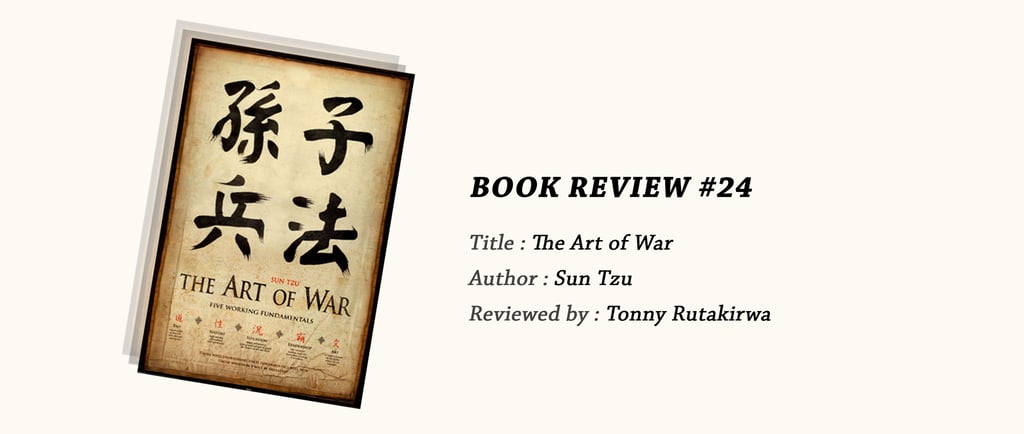
Playing chess, they say, teaches you strategy, and that is all fun and good in the realm of strategic thinking and mental exercises. However, having a comprehensive book, on the other hand, that teaches you when to fight and when not to engage in battle, how to effectively avoid something when it is at its strongest, and how to attack it when it is vulnerable, and mastering the art of deceiving your enemy by appearing weak when you are actually strong and vice versa; now that’s a profound book worth reading and reflecting upon.
The art of war is indeed a timeless piece written by the brilliant strategist Sun Tzu, who was a renowned Chinese general that specialized in military tactics and strategic warfare. His work elucidates the various types of conflicts and provides insightful perspectives on the intricate strategies that can lead to victory in war. It is not just a book about battle but also a deep exploration of human nature and conflict.
Sun Tzu’s art of war is an excellent historical book that also intriguingly doubles as a guideline for warfare. It is considered by some historians and scholars as the most significant warfare book ever written in the annals of time. It advises its readers on how to apply wisdom in the realms of warfare, not just on the battlefield but in every aspect of life where competition arises.
Sun, through his philosophical background, immense experience, and unrivaled expertise in warfare, devised a comprehensive framework of tools that are truly essential in winning wars. The art of war is a profound book that has stood the rigorous test of time. Its principles are as applicable now in the modern world as they were in the historical period in which it was originally penned.
The structure of the book does not conform to the conventional pattern of your average literary work. Instead, it is meticulously divided into 13 distinct parts. Each part is dedicated to specific characteristics, philosophies, and strategies of war; for instance, it outlines the various principles soldiers require to successfully navigate and win a particular conflict or struggle.
The art of war was crafted like an instructional manual, detailing different scenarios in various types of warfare and offering insights into the different tactics and strategies that lead to success in those arduous battles. It holds the proverbial key to winning various conflicts, which has rendered it highly regarded and frequently referenced throughout history by military leaders, scholars, and tacticians alike.
What Should You Expect From The Book?
This enlightening book takes you on an engaging and vivid journey into the lives of different historical generals, their tactical maneuvers, and the critical requirements of war, providing great insights into the struggles faced by conquerors many years ago. It elucidates the fact that size does not matter when it comes to warfare and conflict. Without the proper knowledge of war, even small kingdoms can easily conquer larger realms that lack strategy.
Additionally, the book was originally written to guide military strategies in ancient China. However, the immense wisdom embedded in its pages can also be applied in the non-violent lives of modern civilians. The wars and strategies discussed within the book can be perceived as metaphors to help battle common issues we face today, even though Sun Tzu meant them literally in his own time.
The art of war impressively depicts the crucial role of a general within a state; his duty and responsibility extend beyond merely winning wars; they also encompass the determination of the outcome of the state’s destiny and future. The weight and importance of the role of the general should not be taken lightly by anyone aware of the stakes involved.
The intricate strategies laid out in the art of war can also be used effectively within the business world. This is because the intense competition in the present business environment is strikingly similar to the wars being fought by ancient militaries. The book contains valuable insights on how to tactically attack your competitors and how to achieve the ultimate victory, even if you are not the entity with the most resources at your disposal.
The Five Constants When Observing the Field Of War
The moral law
Heaven: all things beyond man’s control
Earth
The commander
Method and discipline
According to Sun Tzu, these are the five essential criteria whereby the general categorizes his thoughts with respect to the field of battle. All significant decisions regarding a war should be made with careful consideration of the five constants, observing each aspect critically in alignment with the overarching strategy.
Wrapping It Up
This book is truly a real gem for anyone that enjoys delving into the intricacies of history or the complexities of warfare. The most remarkable aspect of the book is that the knowledge it possesses is not only solely restricted to the battlefield, but it can also be applied to fight the metaphorical wars of everyday life and challenges we encounter in contemporary society.
Moreover, the book also outlines five dangerous faults that can adversely affect the general — reading this insightful book will not just teach you how to win your wars but will also mold you into a better and more strategic “General.” Therefore, do yourself a favor and get a copy of the art of war today, and immerse yourself in its wisdom and historically significant teachings.